
A 501(c)(3) charitable organization. Copyright © 2006 to Present OC Hiking Club/Hike Everywhere, All rights reserved. Distribution or publication of this site's content without prior written permission is prohibited.
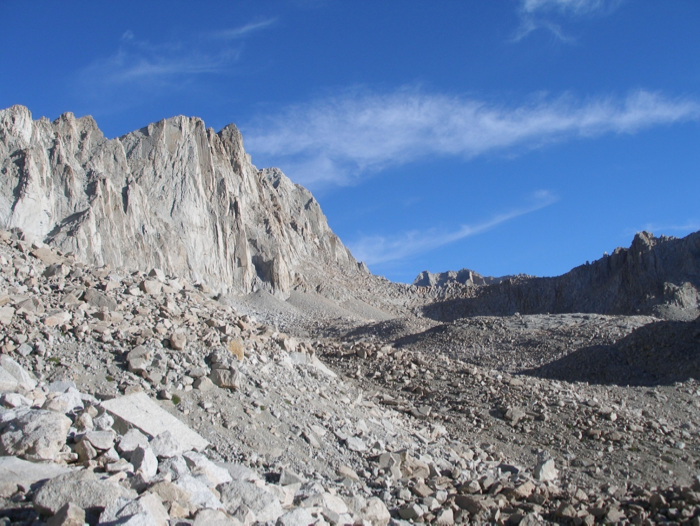
HIKING ON ROUGH OR ROCKY TERRAIN
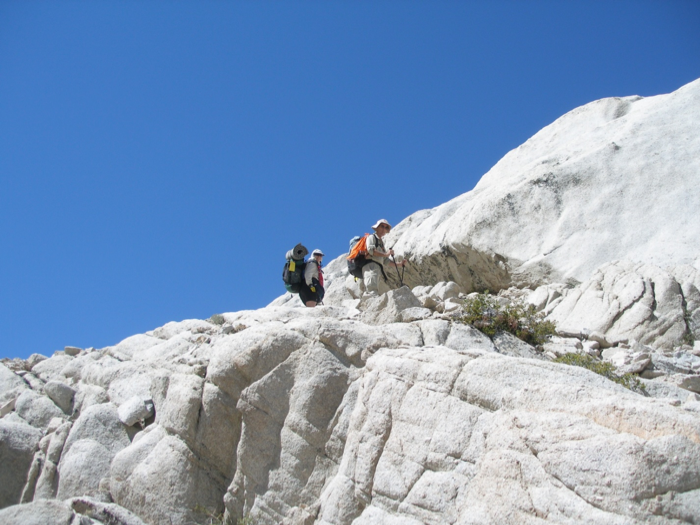
SLOW DOWN! You will have more time to react to a problem.
- Travel slowly and deliberately.
- Carefully select the route of travel.
- Use a walking stick or poles.
- Don’t grab onto tree branches or brush (it may give way).
- Enter ditches/drops of a few feet, feet first to avoid injury.
- Maintain distance from others to avoid collisions.
- Avoid moving to the outside edge to allow others to pass.
- On narrow trails; uphill has the right of way.
- Don’t insist on the right of way. Terrain and circumstances dictate your actions.
- Use gaiters to prevent sand/gravel from entering your boots.
- Maintain a realistic pace.
- Take rest stops.
- Avoid overdressing and overheating
- Drink fluids regularly, eat regularly, and increase as needed.
- Take care of your feet (treat “hot spots” before they become blisters).
- Pack your equipment to prevent loss and damage, for pack balance, for easy access and safety.
- Be prepared to detour and backtrack.
Foot placement
- On soft ground – step on rocks, twigs, vegetation
- Step lightly to check for firm ground
- Place the full foot surface flat on the ground
- Large rocks may not be stable, especially in streams or on inclines
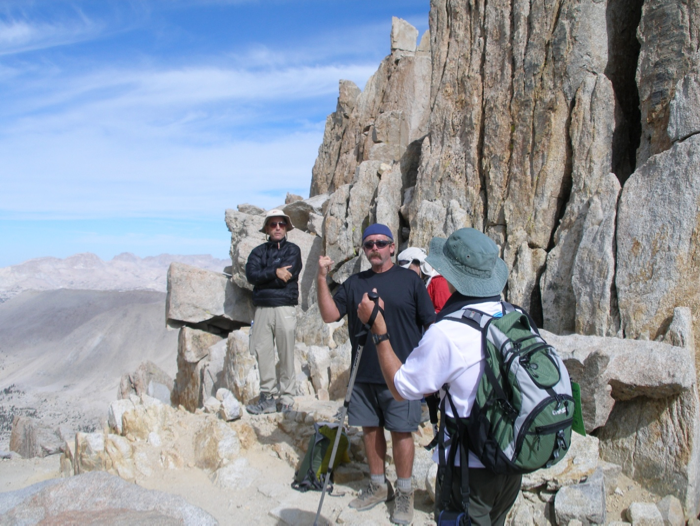
Footwear for Hiking on Rocky or Rough Terrain
- The harsher the terrain; the sturdier the footwear.
- Wear boots with ankle support and heavier soles.
- Replace insoles sold with boots with arch support insoles.
- Double-tie laces.
Proper Use of Hiking Poles
- Two hiking poles are preferable to a walking stick.
- Retract poles and stow for boulder hopping/bushwhacking.
- Straps stop a dropped pole from becoming a lost pole.
- A proper grip requires no effort to swing the poles forward.
- Adjust poles to the proper length; your hands level with your waist.
- Readjust poles for inclines; shorter for uphill, longer for downhill.
- Use a ski pole grip; straps across the palm so your wrist (not grip) bears weight.
- “Baskets” (inverted cups) on the end of the pole help prevent sinking in sand or catching in cracks.
- Never push with your hands past (behind) your waist; it’s wasted effort.
- Try to always have at least 3 points of contact (feet and poles) with the ground.
How to Balance and Secure your Backpack
- Try to have weight balanced in your pack – left to right; top to bottom.
- A top heavy pack raises your center of gravity.
- Be careful if bending to pick something up while wearing a loaded pack.
-
Secure the pack to prevent sudden shifts of weight that will unbalance you:
- Put on pack with loose shoulder, waist straps, and other straps.
- Tighten shoulder straps only.
- Latch waist strap and barely tighten.
- Loosen shoulder straps so weight will settle on hips.
- Tighten waist strap.
- Retighten shoulder straps.
- Use sternum strap if available.
- Use additional adjustment straps if available on pack.
A 501(c)(3) charitable organization. Copyright © 2006 to Present OC Hiking Club/Hike Everywhere, All rights reserved. Distribution or publication of this site's content without prior written permission is prohibited.